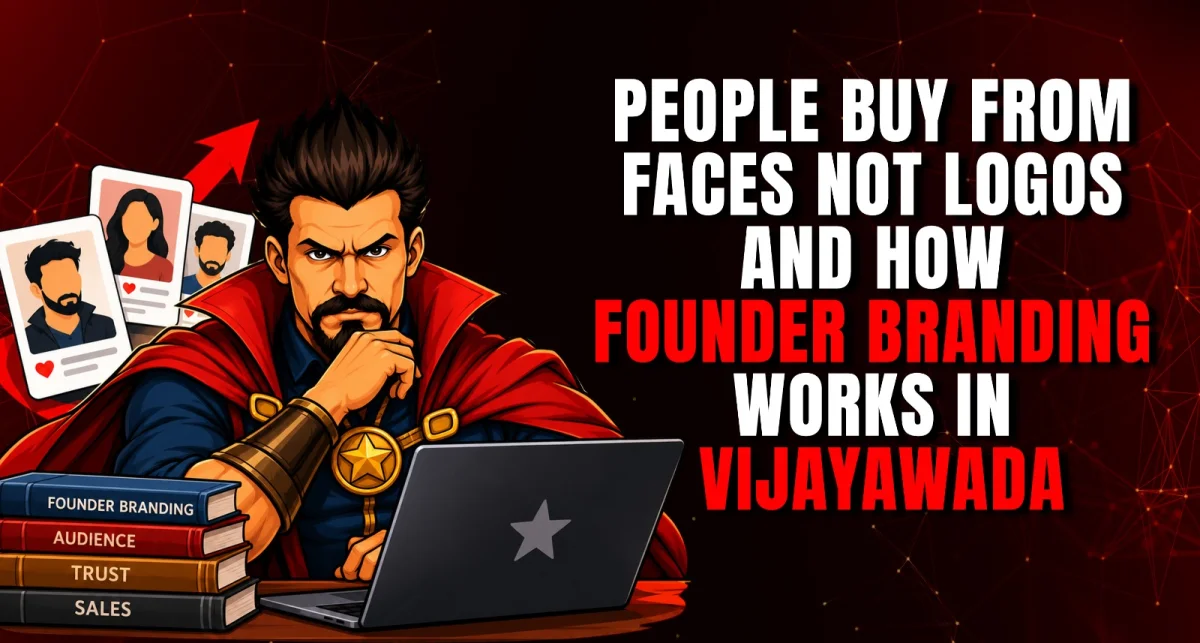
In this market, trust isn't a brand attribute. It's the product. Here's how to build one that earns it.
Technical Avengers Pvt. Ltd. is a business growth agency working with real estate developers, plot ventures and property businesses across Amaravati, Vijayawada, Tadepalli, Mangalagiri and Guntur. This guide covers what we build when a developer asks us to make their brand credible.
Watch a family decide on a property in the capital region and you'll notice something.
They're not comparing elevations. They're not weighing colour palettes or debating which logo looks more premium. They're sitting across from a builder trying to answer one question they'll never ask directly:
Will this actually get built, and will it be mine?
Everything else the renders, the brochure, the sample flat, the hoarding is evidence they're using to answer that question. In most categories, branding is about desire. In real estate in this region, branding is about risk reduction.
Developers who understand that build brands that sell. Developers who don't produce beautiful marketing that generates enquiries and loses them at the second meeting.
Why Trust Is Harder to Earn in This Market
Four things make the capital region a more demanding trust environment than most.
The market has seen genuine volatility. Timelines have shifted, policy has moved, and projects across the region have started, stalled and restarted. Buyers here have watched it happen sometimes to people they know. That memory doesn't disappear because the outlook has improved. Any brand operating here is speaking to an audience that has learned to be careful.
Also Read: How Digital Marketing Is Transforming Real Estate Sales in Andhra Pradesh
Land and title complexity is real. Land pooling, conversions, approvals, layout sanctions, litigation history. Buyers may not know the terminology, but they know enough to be worried, and they've heard the stories.
The buyer is often not local. A significant share of capital region demand comes from outside other districts, Hyderabad and NRIs. A buyer who can't visit the site monthly is relying almost entirely on what your brand communicates. Distance multiplies the trust requirement.
Investors and end-users need different reassurance. An investor wants appreciation logic, exit liquidity and timeline certainty. A family wants to know their children will grow up in a completed, livable place. Marketing that tries to say both things at once usually convinces neither.
What Buyers Are Actually Trying to Find Out
Every enquiry carries an unspoken checklist. Your brand either answers it or leaves the buyer to guess.
Have you finished anything before? And can I go and stand in it?
Are the approvals genuinely in place? Not "in process"
What's your RERA registration, and does it match what you're advertising?
Is the title clean, and can my lawyer verify it easily?
Will the delivery date hold? What happened to your last project's date?
Who are you, actually? Is there a person accountable, or just a company name?
What do people who bought from you before say now — two years later, not on possession day?
What happens if something goes wrong?
Notice that none of these are answered by a render.
A real estate brand in this market is the sum of how convincingly you answer that list everywhere, consistently, before anyone has to ask.
Why Most Real Estate Branding Here Fails
Look at the category and the pattern is immediate.
Everything looks the same. Gold serif type, dark blue or deep green, a skyline silhouette, a family walking toward a building at golden hour, and a tagline about "living your dream." Being the ninth builder to use that visual language guarantees you're forgettable and worse, it makes you interchangeable with whoever last disappointed the market.
Over-polish reads as a risk. This is counter-intuitive and it's important. In a market where buyers have been burned, a hyper-glossy campaign with no visible people, no site progress and no track record can actively increase suspicion. Buyers have learned that the most aggressive marketing sometimes came from the projects that stalled. Polish without proof is a warning sign.
Renders substitute for evidence. A render is a promise. Buyers in this region have collected promises. A photograph of a slab being poured last Tuesday is worth more than a photorealistic image of a clubhouse that doesn't exist.
The builder is invisible. Property is one of the largest financial decisions a family makes, and in most local marketing there is no identifiable human accountable for it. In a relationship-driven market, that absence is conspicuous.
Marketing stops at booking. The customers who could most powerfully vouch for you people who took possession two years ago and are happy are never featured, because the marketing budget ends at sale.
Building the Brand: Nine Elements That Earn Trust
1. Position Around One Buyer, Not Everyone
"Premium living for discerning families" describes nothing. Every builder in the region could print it tomorrow.
Do this instead:
Choose a specific buyer: first-time end-users, government employees relocating to the capital region, NRI investors, retirees, or plot investors with a five-year horizon
Build the entire brand around what that buyer's specific anxiety is
Test your positioning against one question: could your nearest competitor claim exactly this? If yes, it's a description, not a position
Accept that positioning excludes people. A brand for everyone reassures no one
An NRI investor and a local family buying their first home need different proof, different content and different language. Trying to serve both with one message produces a message that convinces neither.
2. Make Delivery Track Record Your Central Asset
If you have completed projects, this is the most valuable thing you own and most builders underuse it.
Do this:
Build a dedicated "Completed Projects" section with real photographs of the finished, occupied building not renders, not construction shots
State the original announced delivery date and the actual handover date. If you delivered on time, that's your single strongest claim in this market. Say it plainly
Show the project as it looks now, years later. Maintenance and ageing are what buyers worry about
Film residents living there, if they'll participate
Give addresses so a serious buyer can go and look
If you haven't completed a project yet, don't fake experience. Build trust differently through radical transparency on the current project, verifiable approvals, and the founder's own accountability. New builders can be trusted. Builders pretending to be established cannot.
3. Be Radically Transparent About Approvals and Legal Status
In this market, transparency is a competitive weapon precisely because so few use it.
Do this:
Display your RERA registration number prominently on your website, brochures, hoardings and every advertisement. Real estate regulations require this in advertising material verify current requirements for your state and project type
Publish the approval status of each project plainly: layout sanction, building permission, environmental clearance, where relevant
Make legal documentation easy for a buyer's lawyer to obtain. Friction here reads as concealment
Explain the land's history and status where it's relevant to buyer concern
If something is pending, say it's pending and say when it's expected. Buyers discover the truth eventually; being the one who told them is worth more than the delay in telling them
A note on regulation: real estate advertising and disclosure requirements are legally binding and enforced. Nothing here is legal advice confirming current RERA and advertising requirements with a competent advisor before publishing any marketing material.
4. Put the Founder in Front
In the capital region specifically, this may be the highest-leverage brand decision available.
A company name is an abstraction. A person is accountable. Buyers making a large, anxious decision want to know who they're trusting.
Do this:
Give the founder a visible profile: background, experience, why they build, what they'll refuse to compromise on
Have them speak on camera about the project. timelines, materials, standards, and what happens if something slips
Have them appear at the site, not just in an office
Build their search visibility. Buyers will search the founder's name before signing
Answer difficult questions publicly rather than avoiding them
Our BrandVault unit builds this as a complete system, but the first version needs a willingness to be visible and accountable.
5. Make Construction Progress Your Content Engine
This is the single most underused content asset in the category, and it's free.
Every week your site produces evidence. Most builders never film it.
Do this:
Publish monthly progress updates with dated photographs and video. same angles each month so progress is visible
Cover the unglamorous stages: foundation, structure, plumbing, wiring. These signal seriousness in a way a clubhouse render doesn't
Show materials and specifications, and explain choices
Use drone footage to show the site in context
Send progress updates directly to existing buyers, and publish them publicly at the same time
Maintain the cadence even when progress is slow. Especially then silence is what frightens buyers
A builder publishing dated monthly progress for eighteen straight months has made an argument no competitor's brochure can answer.
6. Turn Past Buyers Into Proof
Do this:
Film handover moments, with permission
Return to residents a year or two later and film them again. "Still happy after two years" is far more persuasive than possession-day joy
Ask one specific question rather than "how was your experience": "What were you worried about before you booked?" That answer handles an objection for every viewer
Let people speak in Telugu. Authenticity outperforms polish
Publish reviews across Google and property platforms, and respond to every one
Connect serious prospects with willing past buyers directly. Few builders offer this, and offering it is itself a trust signal
7. Answer Objections Publicly, Before They're Raised
Every buyer has the same worries. Address them in content rather than leaving them to the sales conversation.
Also Read: A Complete Guide to Social Media Marketing Companies and Their Services
Do this:
Build content answering: how to verify a title, what RERA registration means for a buyer, what happens if delivery is delayed, how to read an approval document, what to check before booking a plot
Cover the questions that don't flatter you. "Why is our price higher than the project down the road" builds more trust than avoiding it
Publish a genuine FAQ with structured markup so search engines and AI assistants can extract it
Create buyer guides for your specific segments first-time buyers, NRI buyers, investors
This content ranks for searches happening long before anyone has chosen a builder, which means you shape the buyer's criteria before your competitors enter the conversation.
8. Build Visual Identity That Doesn't Look Like Everyone Else's
Identity matters after trust, not instead of it.
Do this:
Study what every competitor in the region uses, then deliberately avoid that territory
Choose a colour and type system that lets a buyer recognise your hoarding at 60kmph
Show real photography over renders wherever possible. Where renders are necessary, label them clearly as renders
Photograph real people your team, your buyers, your site rather than stock families
Build a full system: logo, palette, typography, site hoardings, brochures, signage, sales office, standees, digital templates
Write it into a guideline document so every vendor builds the same brand
Our Originator unit handles brand architecture end to end. The commercial point: consistency is what turns spend into recognition. Inconsistent branding means paying for impressions that never accumulate.
9. Make Your Digital Presence Survive Scrutiny
Assume every serious buyer will search you thoroughly, including your founder's name and your project name plus the word "problem."
Do this:
Own the first page of search results for your company name, your founder's name and each project name
Complete and verify your Google Business Profile with photographs of the office and sites
Maintain accurate, consistent information across every property portal and directory
Address any negative coverage directly rather than hoping it stays buried
Structure your information consistently so AI assistants describe you accurately buyers increasingly ask them for builder recommendations, and competition for those citations in this region is close to zero
Keep project pages updated. An abandoned-looking website suggests an abandoned-feeling project
What to Avoid
Guaranteed appreciation claims. Regulatory risk and credibility risk in one line
Renders presented as photographs. Label them
Advertising without RERA details where required. Legally exposed and immediately noticed by informed buyers
Superlatives without substance. "Best builder in Amaravati" is what everyone says; nobody believes any of them
Stock photography of foreign families. It signals you have nothing real to show
Silence during delays. The delay damages you. The silence damages you far more
Marketing that stops at booking. Your existing buyers are your most credible salespeople
The Realistic Sequence
Months 1–2: Positioning, brand architecture, identity system. Approval and RERA documentation organised and made public. Founder profile built.
Months 2–3: Website with project pages, completed-project evidence, and structured FAQ content. Google Business Profile complete. Photography of sites and completed work.
Months 3–6: Monthly construction progress content running. Buyer testimonial content. Objection-handling content published consistently. Search visibility building.
Ongoing: Progress cadence maintained without gaps. Past-buyer content refreshed. Founder visibility sustained. Advertising layered on once the proof exists.
That last point matters. Advertising a project with no visible track record, no progress content and no accountable founder generates enquiries that die in the second conversation. Build the proof, then amplify it.
How Technical Avengers Works With Developers
Every engagement starts with a business question, not a campaign brief. Most developers in this region aren't short of enquiries. What they lack is buyers who trust them enough to book a site visit and sign. That's a credibility gap, and more ads won't close it.
So we build the team around whatever sits between an enquiry and a booking. Originator sharpens your positioning and brand architecture, so every project sits clearly under the builder's name. Code Panther builds the website and project pages that buyers check before they ever pick up the phone. TaleROX films construction progress, photographs handed-over projects and records the stories of families who have already moved in. Crawler makes sure you appear when someone searches the project name, the builder or the locality, including in AI-generated answers. TrendRanger keeps your social channels alive, Connector brings in regional creators your buyers already follow, and AdVenger runs campaigns aimed at people ready to buy rather than browse. BrandVault puts the founder in front of the market, and in real estate that is often the single highest-return piece of work.
The Numbers Behind the Squad
Metric | Count |
Brands & businesses served | 100+ |
Videos produced | 250+ |
Creator network | 1,000+ |
Campaign reach | 5M+ |
Years of combined experience | 12+ |
Trust Is Built Before It's Needed
Think. Build. Amplify. Grow.
By the time a buyer is sitting across from you, they've already decided whether to trust you. Your brand made that decision for them. Let's make sure it made the right one.
Technical Avengers Pvt. Ltd. 📞 +91 9030 218 219 ✉️ admin@technicalavengers.com 🌐 technicalavengers.com
Working with real estate developers and property businesses across Amaravati, Vijayawada, Tadepalli, Mangalagiri, Guntur and Andhra Pradesh.
FAQs
What matters most in real estate branding in Amaravati?
Trust, ahead of everything else. Buyers here are primarily assessing risk — will it get built, and will it be theirs. Visual identity matters, but it works after credibility, not instead of it.
How can a new builder with no completed projects build trust?
Through radical transparency rather than borrowed credibility. Publish approvals and RERA details openly, run consistent dated construction progress content, and put the founder visibly and accountably in front. New builders can absolutely be trusted; builders pretending to be established cannot.
Should I use renders or photographs in marketing?
Photographs wherever possible. Renders are promises and buyers in this market have collected plenty. Where renders are necessary, label them clearly as renders.
Is it necessary to display RERA registration in advertising?
Real estate advertising and disclosure requirements are legally binding and vary by state and project type. Confirm current obligations with a competent advisor — but as a brand matter, prominent disclosure is a trust asset, not just a compliance one.
How important is the founder's personal brand for a developer?
In this region, very. Property is a large, anxious decision and buyers want an accountable person, not a company name. Buyers will search the founder before signing.
What content should a developer publish?
Monthly dated construction progress, completed-project evidence, past-buyer stories filmed a year or two after handover, and objection-handling content answering what buyers actually worry about.
How do I handle a project delay publicly?
Communicate early, specifically and repeatedly. The delay damages you; silence damages you far more, and buyers discover the truth regardless. Being the one who told them is worth more than the time you gained by not.
Should I market to investors and end-users the same way?
No. Investors need appreciation logic, liquidity and timeline certainty. End-users need livability and delivery confidence. Marketing that addresses both at once usually convinces neither.
Does AI search matter for real estate?
Increasingly. Buyers ask AI assistants about builders and locations, and those answers draw on whatever consistent information exists. Competition for those citations in this region is currently minimal.
How do I get started?
Call +91 9030 218 219 or email admin@technicalavengers.com. We'll review how your brand currently reads to a cautious buyer and tell you honestly what's missing.